In 2026, the Democratic Party regained control of Congress, both the House and the Senate, in a landslide that crushed Trumpism. A large part of that victory came from secular voters, who were among, if not the most important constituency for the Democratic Party in their overwhelming victory. Here are five takeaways about the secular vote in 2026, based on what we can gather from available data as of yesterday.
Record Vote for Democrats
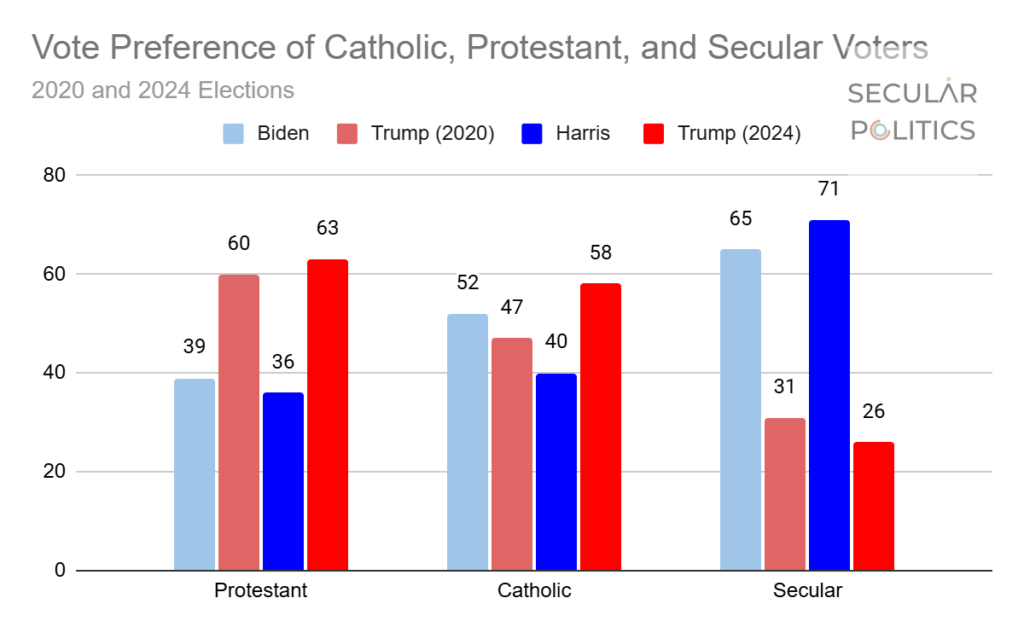
According to the Voter Poll by SSRS, which is now the equivalent of the old exit polls, 78% of secular voters supported the Democratic candidate for the House of Representatives. When we compare this to previous years, even though there’s no official data for the 2022 midterm elections, we can see that compared to 2024, when 71% of secular voters supported Kamala Harris, and 2020, when 65% supported Joe Biden, the secular vote came out even stronger this time.
The numbers we’re seeing now are reminiscent of 2008, when Barack Obama was elected president and 75% of non-religious voters supported him, marking a high watermark for secular vote support for Democrats, despite this cohort historically leaning heavily Democratic.
Crucial in the Senate
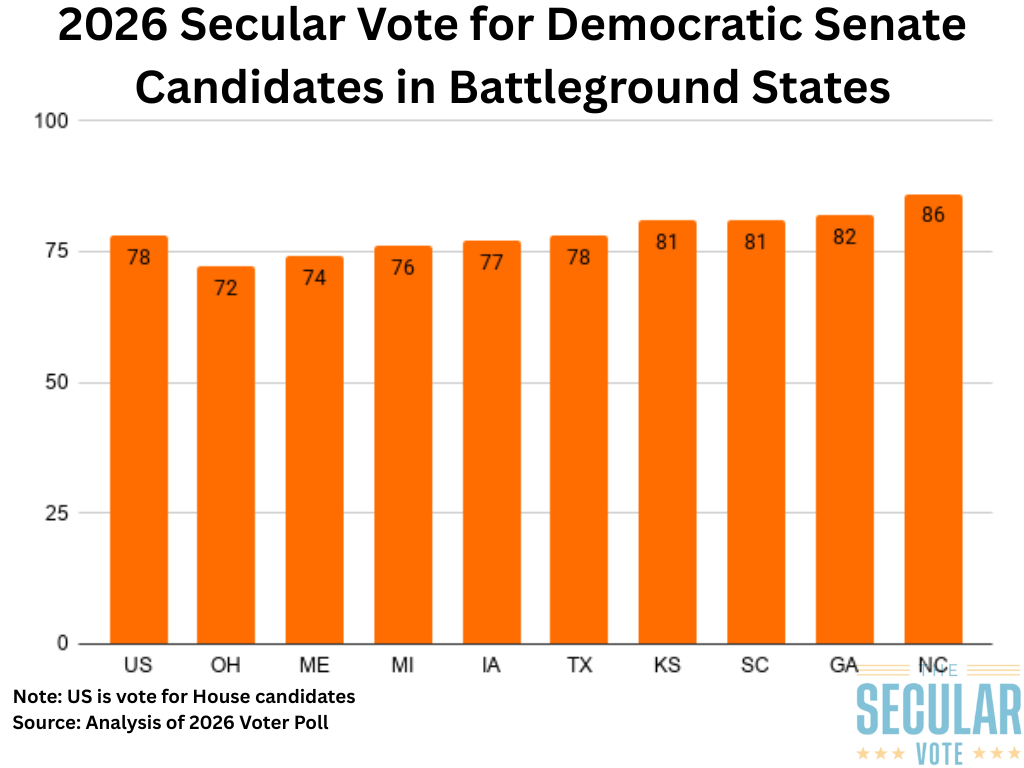
It wasn’t just the national House vote that mattered for Democrats; in nine critical Senate races, Democrats regained control by winning close (and not-so-close) contests. At least seven in ten secular voters supported Democratic Party candidates. Support was lowest for Sherrod Brown in Ohio (72%) and Troy Jackson in Maine (74%). However, four states surpassed 80% support. These include 81% in Kansas and South Carolina, both considered major upsets: Kansas saw a Republican candidate lose for the first time since Franklin D. Roosevelt’s election, and in South Carolina, Democrats took a seat that once belonged to longtime Senator Lindsey Graham. In Georgia, 82% of secular voters supported Senator Jon Ossoff’s reelection, and in North Carolina, former Governor Roy Cooper received support from 86% of secular voters.
A Big Share of the National Electorate
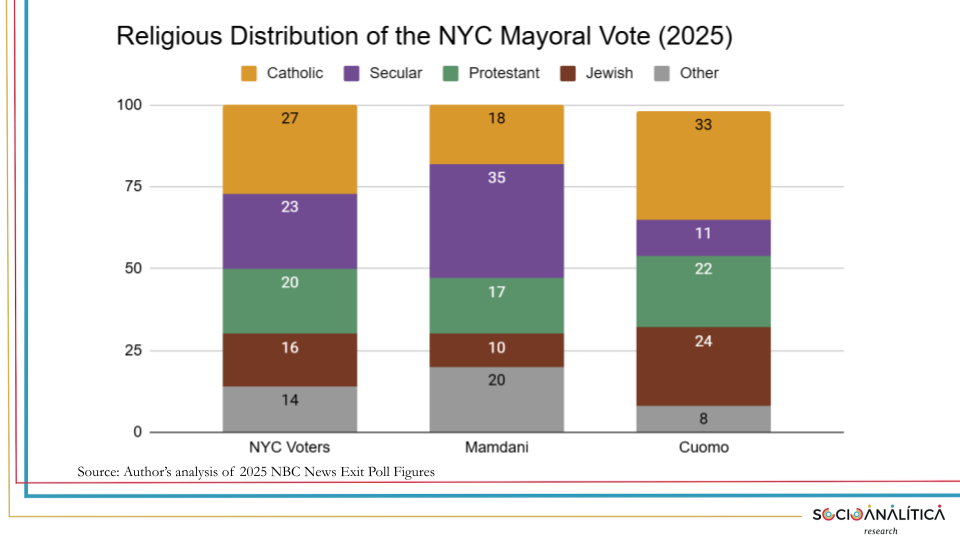
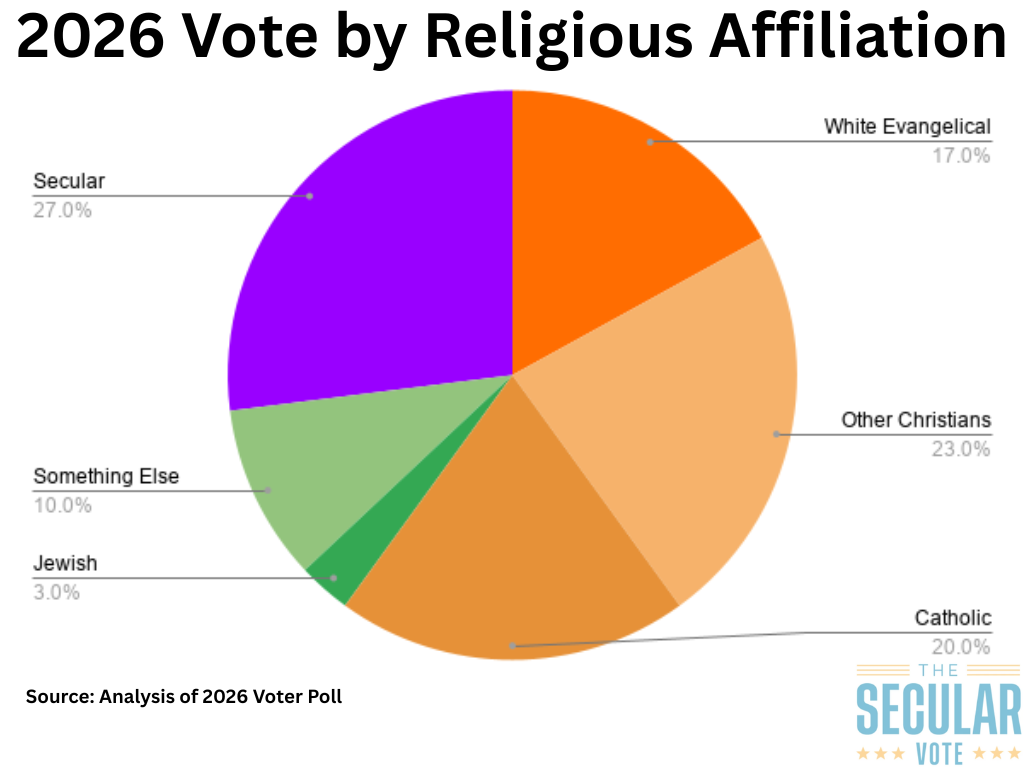
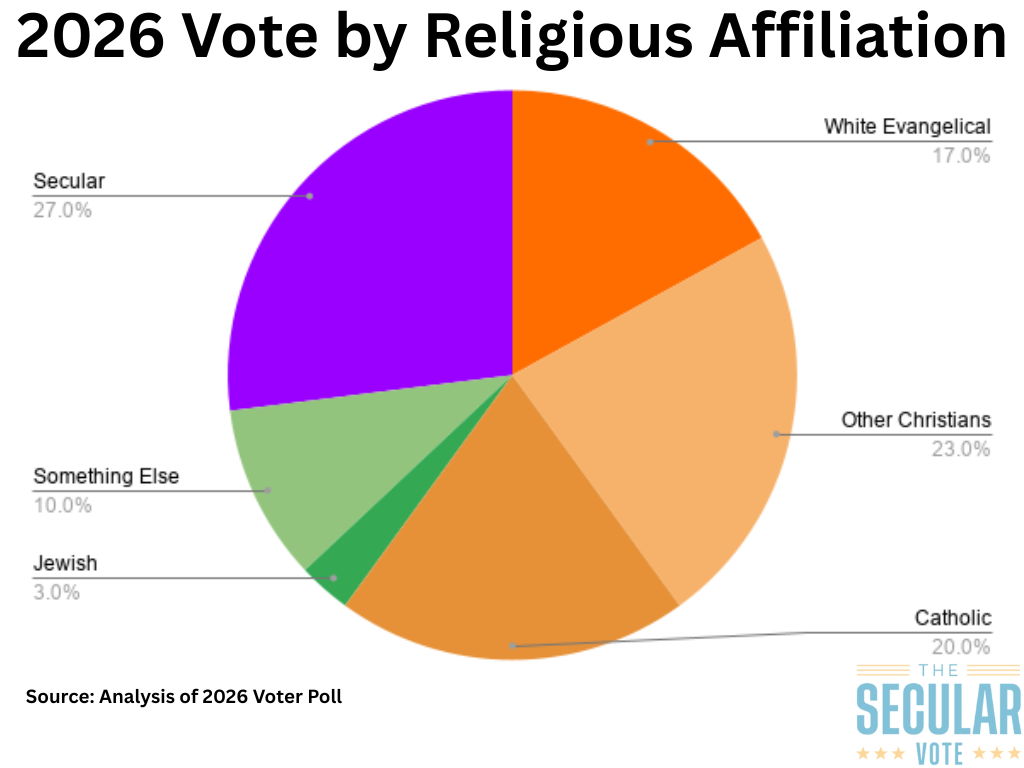
According to the poll, 27% of respondents identified as non-religious in the midterm election. If we consider that in the House vote, Democrats garnered around 55% of the overall vote, that suggests almost four in ten (38%) votes for Democratic Party candidates came from non-religious voters. Not only was there overwhelming support for the Democratic Party from secular voters, but their growing share of the electorate also means they account for an oversized share of the Democratic Party vote.
And in the States
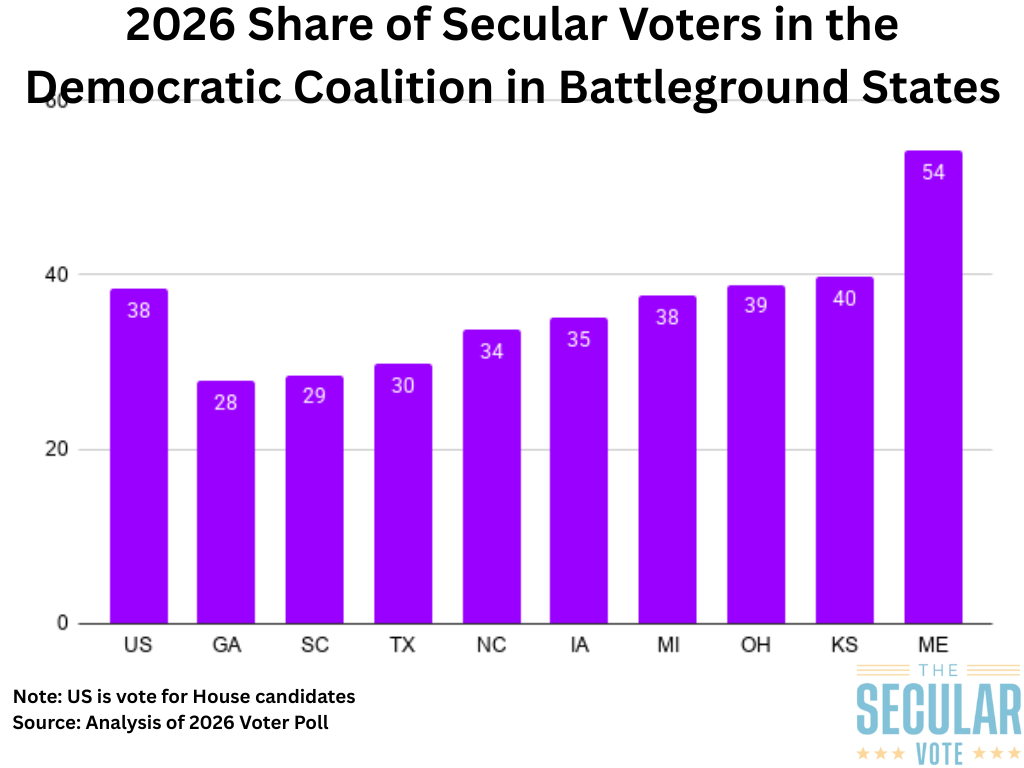
In the Senate races, secular votes also represented an overwhelming share of the Democratic vote. For example, in Maine, secular voters accounted for 54% of the electorate, while in Kansas, they represented around 40%. Other states ranged in the mid-30s, except in southern states like South Carolina, Georgia, and Texas, where the secular share of the vote was lower because fewer secular voters lived there. However, they still exceeded expectations, accounting for nearly 3 in 10 votes for Democratic candidates.
Don’t Forget the Candidates.
According to a list compiled by the Friendly Atheist Hemant Mehta, who has been tracking these candidates, at least two openly nonreligious candidates made it to Congress. One is the expected state representative Chris Rabb of Pennsylvania, who won his primary earlier this year and is now the incoming congressman for Pennsylvania’s third district in Philadelphia. The other is Fred Wellman, a challenger who unseated a Republican incumbent in Missouri’s second district.
Rabb will now join Jared Huffman, who also sailed to reelection, as the two non-theistic members of Congress, with Rabb being the first openly atheist candidate elected to Congress. Additionally, all the members of the House of Representatives belonging to the Congressional Freethought Caucus were reelected. In state-level politics, according to Mehta’s tracking of candidates for state representative and state Senate positions, 75 openly secular winners now hold seats in state houses and 24 in the state Senate. This brings the total to nearly 100 openly secular legislators starting next year.
Conclusion
Secular voters came out in full force in this election, establishing a record level of support for Democratic candidates, reminiscent of their backing for Barack Obama nearly two decades ago. They played a crucial role in states where Democrats upset Republican candidates and were consistent supporters in areas where Democrats retained their seats. Depending on how you analyze the electorate by religious affiliation, these polls clearly showed more secular voters than evangelical Christian, Catholic, or Mainline Christian voters.
This marks a significant moment for secularism and its influence in electoral politics. The main reason often cited for supporting Democrats in this cycle was the atrocious economic conditions and inflation resulting from Republican policies, particularly the mismanagement during President Trump’s administration. Secular voters have shown the strongest opposition to Christian nationalism, as shown by the PRRI surveys measuring sentiments on the issue.
While many are concerned about the economy on the surface, there are deeper worries among secular voters regarding the role of Christianity, and the Right’s particular brand of Christianity, in government, schools, and other public settings. This has driven these voters to engage actively in the political process since they have long been unhappy with the administration and Trump specifically.