The 2025 elections are over, with big wins for Democratic candidates in the two governorships in play, as well as the New York City mayoral race. In this piece, I will gather my thoughts on how secular voters performed, based on the exit polls and my experience when information is not available. So far, the various outlets presenting exit poll results have only included religion breakdowns in New York City, partially in Virginia, and none in New Jersey.
New York City
Zohran Mamdani won a majority of the vote in New York City, defeating former disgraced Governor Andrew Cuomo, a Democrat who ran as an independent after losing in the primary. Despite concerns about how a split Democratic vote might affect his chances, Mamdani not only secured victory but also garnered a significant majority.
Exit polls indicated a considerable generational gap in New York City’s electorate, with young people under 45, particularly those under 30, overwhelmingly supporting Mamdani. Additionally, he saw increased support among voters of color, including Black, Latino, and Asian voters, compared to the primary.
NBC’s exit polling broke down the results by religion. According to their data, 23% of New York City voters identified as secular. Out of nearly 2 million votes cast, secular voters represented approximately 460,000 votes, or just under 100,000 fewer votes than Catholics (27%). The Catholic vote was the largest religion cohort.
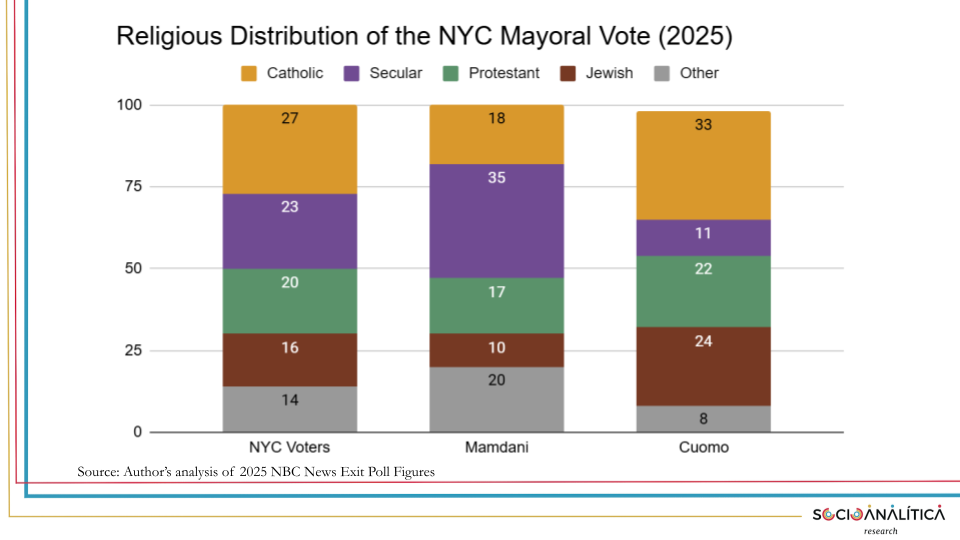
Mamdani’s strongest base of support was secular voters, more than three-quarters (76%) of whom voted for the now mayor-elect. Approximately 350,000 of Mamdani’s 1 million votes came from secular voters. Considering how well Mamdani fared among young voters under 30 (78%), it is understandable that he showed such strength among secular voters. I assume it also didn’t hurt that being to the left of most Democrats (as a Democratic Socialist) was also a factor for his strong secular support, since secular people tend to be more liberal than Democrats overall.
Mamdani’s share of the secular vote was more than three times that of Cuomo (35% vs. 11%). In a sign of a younger New York being behind his candidacy, one in five of his supporters (20%) were non-Christian or Jewish religious voters, likely stemming from Mamdani’s own Muslim faith. Only eight percent of Cuomo’s supporters came from religious communities other than Jewish and Christian.
Christian and Jewish voters were more favorable toward Cuomo. One-third of Cuomo’s votes came from Catholics, nearly one-quarter (24%) from Jewish voters, and more than one in five (22%) from Protestant Christians. Mamdani had similar shares of Catholics (18%) and Protestants (17%), while just one in ten was Jewish.
Virginia/New Jersey
In New Jersey and Virginia, major news networks like CNN, NBC, and CBS have not broken down election results by religion. However, secular voters were among the strongest opponents of Trump in the 2024 race in those states (see the blog entries about secular voters in Virginia and New Jersey in 2024). The results in both states show stronger support for the Democratic candidates (Rep. Spanberger of Virginia and Rep. Mikie Sherill of New Jersey compared to former Vice President Harris last year.
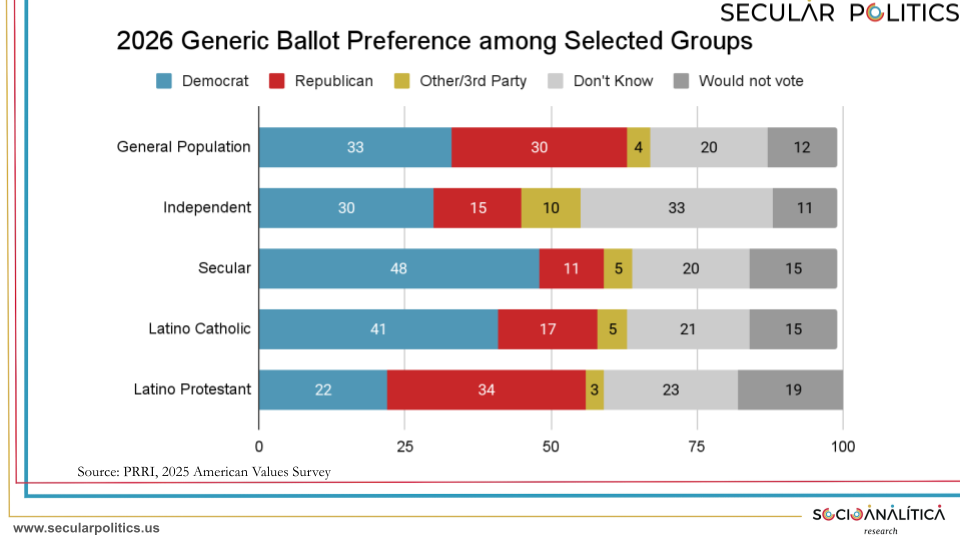
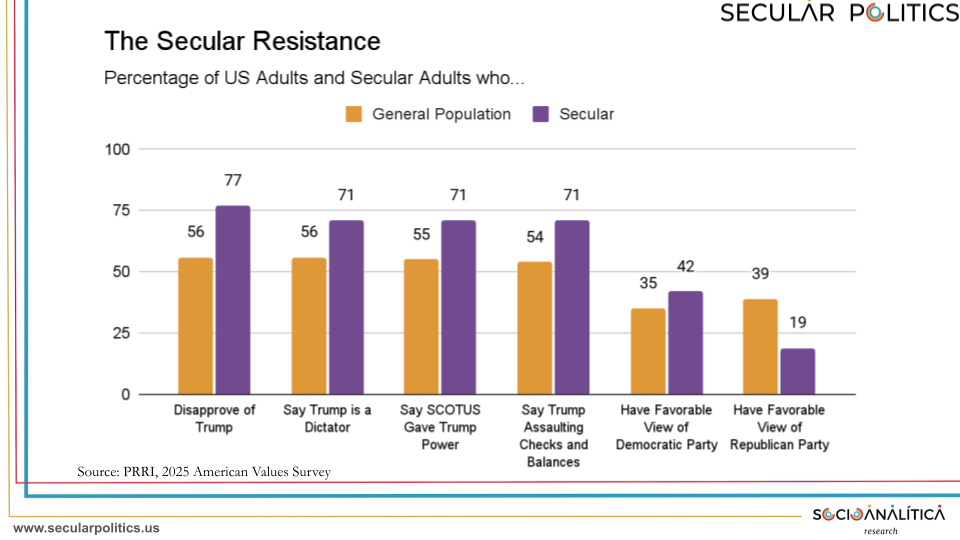
We know that secular voters are among Trump’s strongest opponents. In recent elections, nearly 70% of non-religious voters in both Virginia and New Jersey supported Democratic options. Given the close alignment of the Republican candidates with Trump, it is reasonable to anticipate that these voters broke heavily in favor of the Democratic candidates once again. It wouldn’t be surprising if their support for the Democratic candidates neared 80% in 2025. Whether in Virginia, New Jersey, or New York City, secular voters have become an integral part of the Democratic coalition and are necessary for any Democratic success in the 2026 midterms.